Quick Answer: Full grey coverage colors every grey strand to one solid shade and usually needs a root touch-up every 4 to 6 weeks. Grey blending uses highlights, lowlights, and gloss to soften the contrast between your grey and your natural color, so regrowth is less obvious and appointments can often stretch to 8 to 12 weeks. Coverage suits a uniform, solid look; blending suits anyone tired of seeing a root line every few weeks.
For many of my clients, the question comes up at the same moment: the roots are coming through faster, coverage isn’t lasting as long, and the four-week touch-up has started to feel like a part-time job. That’s usually the right time to compare grey blending and full grey coverage, because both work well. They just suit different hair and different lives.
What Full Grey Coverage Is
Full coverage uses permanent color to bring every grey strand to the same shade as the rest of your hair. The result is solid and uniform, and when it’s fresh, nobody sees any grey at all. The trade-off is regrowth. Grey grows in next to a solid color, so the line at the root shows sharply, especially if your color is dark. That’s what keeps people on a 4 to 6 week cycle. Over the years, color also builds up on the lengths, which is part of why roots and ends can start to look like two different shades.
What Grey Blending Is
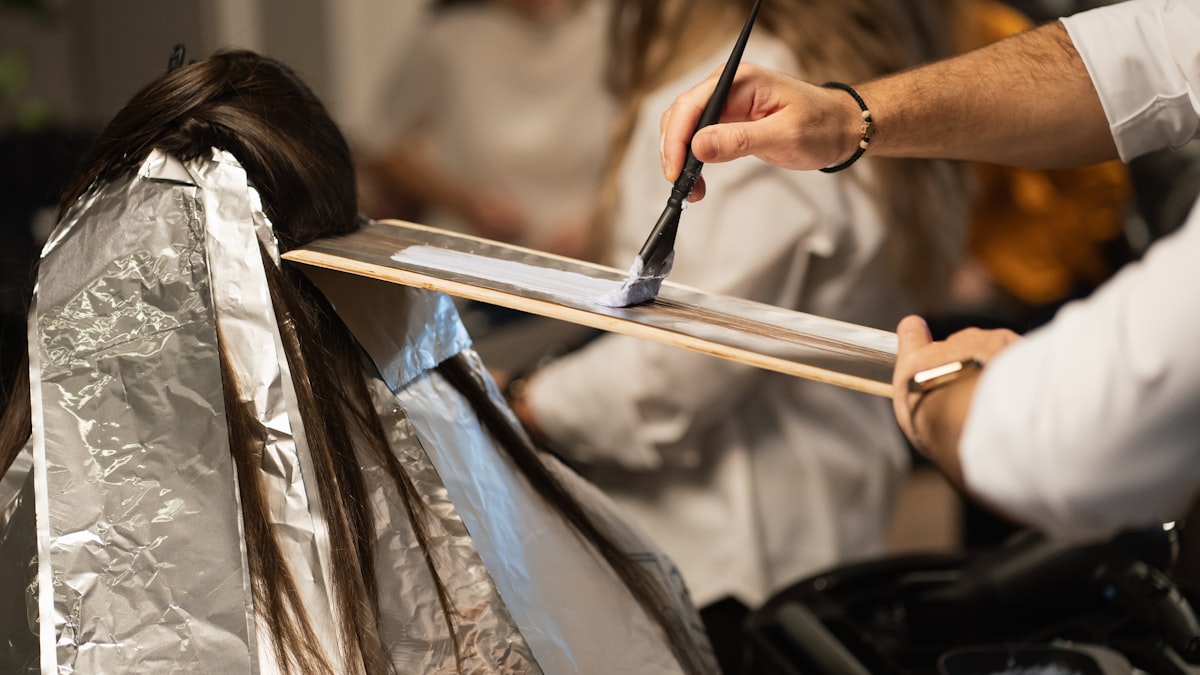
Grey blending doesn’t try to hide every grey hair. Instead, I use a mix of highlights and lowlights to bring your base color and your grey closer together, then finish with a gloss to tie the tones in and add shine. The grey becomes part of the dimension rather than something that pops out. Because there’s no solid line for regrowth to grow against, it grows out softly. You’ll still see some grey up close, and a gloss refresh between appointments keeps the tone clean.
Grey Blending vs. Grey Coverage: How They Compare
The look: coverage is one solid shade; blending is dimensional, with grey woven in.
Regrowth: coverage shows a clear line; blending grows out soft.
Typical timing: coverage about every 4 to 6 weeks; blending often every 8 to 12 weeks, with a gloss in between.
Scalp contact: coverage is applied right at the scalp; with highlights and lowlights, less of the color sits directly on the skin.
Grey visibility: coverage hides it fully when fresh; blending softens it rather than hiding it.
Which Is Right for You?
Full coverage is usually the better fit when you have a smaller amount of grey, love a rich, solid color, and don’t mind regular visits. Grey blending tends to suit you better when grey makes up a larger share of your hair, when your natural base is dark enough that regrowth shows quickly, when you’d like more time between appointments, or when you’re thinking about growing into your natural grey eventually. There’s no deadline and no wrong answer. Some clients blend for years, others switch back to coverage for a special occasion.
Switching From Full Coverage to Grey Blending
If you’ve had permanent color for a while, blending doesn’t happen in one appointment. The color already on your lengths has to be worked into the new plan gradually, usually over a few visits, with highlights and lowlights placed so the change feels intentional at every stage rather than half-finished. I map that out with you at your consultation, including how many appointments it’s likely to take and what your hair will look like in between.
Grey Blending and Menopause
Blending often works especially well for hair going through menopause. Dimension makes finer hair look fuller than a single flat shade does, and a softer regrowth line takes the pressure off when coverage isn’t lasting as long. If you’ve noticed your color behaving differently lately, Menopause and Hair Color explains why, and Why Grey Hair Resists Color covers what makes coverage harder in the first place.
If you’re weighing highlights against balayage for blending, Balayage vs. Foil Highlights explains the difference, and Choosing the Right Balayage Tone for Your Hair and Skin helps with picking tones that work with your grey. When you’re ready, book a one-on-one consultation at my private studio in Langley and we’ll decide together which approach fits.